


A wedding photography timeline should protect the parts of the day that matter without turning the celebration into a photoshoot. This practical NSW run sheet accounts for real travel, seasonal light and the way receptions actually unfold.
Use it as a starting point, then adjust it for your ceremony, locations, family list and sunset. The goal is enough structure for candid moments to happen — and enough flexibility when the day runs late.
The short answer
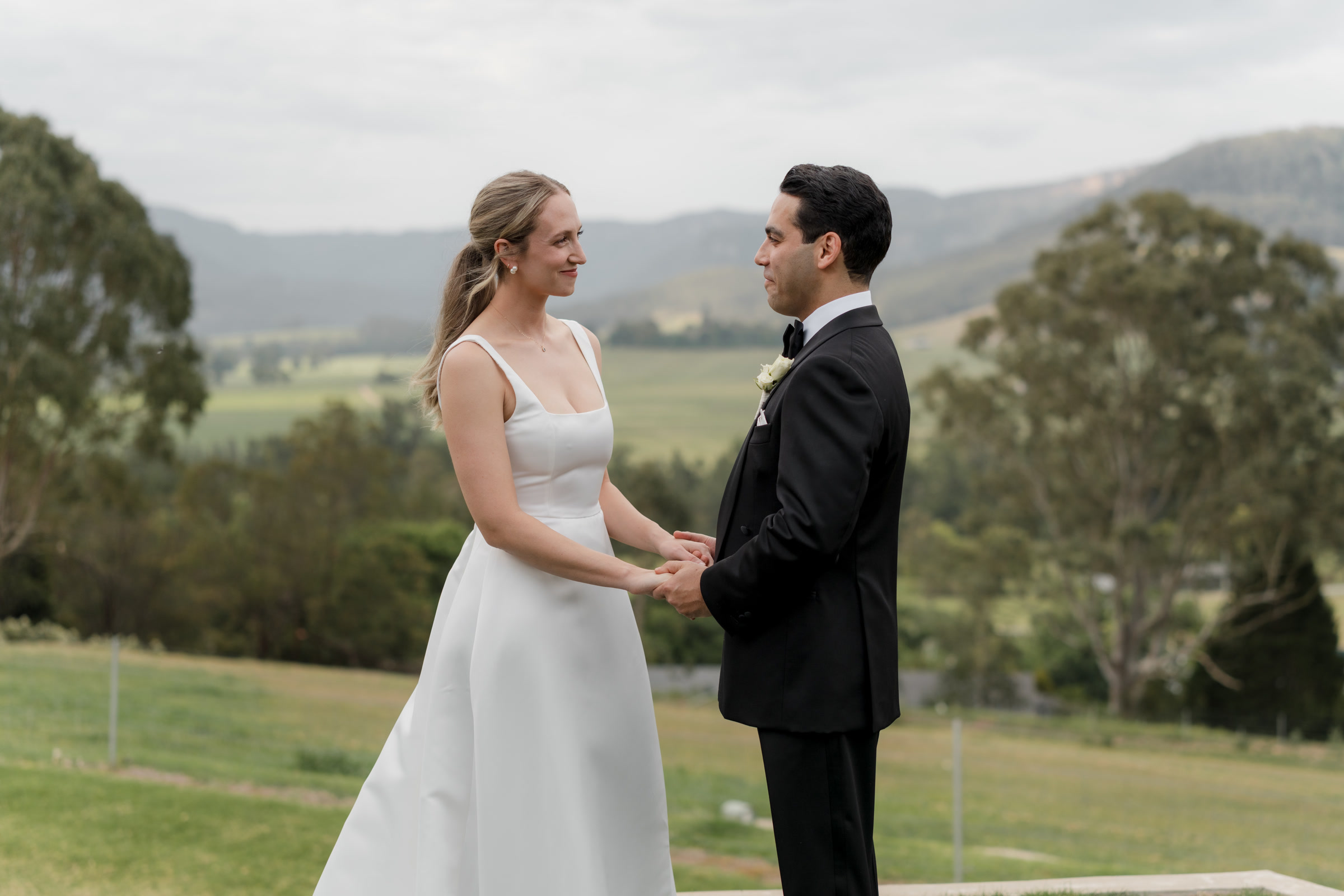
A useful wedding photography timeline is built backwards from the ceremony, the available daylight and the reception formalities you care about. For many weddings, allow roughly 45–75 minutes for the final part of preparation, the ceremony time confirmed by your celebrant, 15–25 minutes for organised family groups, 15–20 minutes with the wedding party and 25–40 minutes of couple portraits. Then add honest travel and breathing room.
Those portrait blocks do not need to happen all at once. A short session after the ceremony and another ten minutes when the light changes usually feels more relaxed than disappearing from guests for an hour.
This guide is about sequence and pace. If you are deciding how far the coverage should extend, compare 6, 8 and 10 hours of wedding photography separately.
A relaxed NSW wedding-day timeline at a glance
Final preparation: details, the last stages of getting dressed and the people sharing that part of the day.
Travel and arrival buffer: driving, parking, unloading gear, walking to the ceremony and being ready before guests settle.
Ceremony: guest arrivals, processional, vows, signing, recessional and the immediate congratulations.
Family photographs: a short, pre-planned list while the right people are still together.
Wedding-party photographs: a few organised frames followed by movement and interaction.
Couple portraits: one calm window, or two smaller windows split between post-ceremony and softer light.
Reception: room details before guests sit, entrance, speeches, first dance and enough dance-floor time for genuine energy.
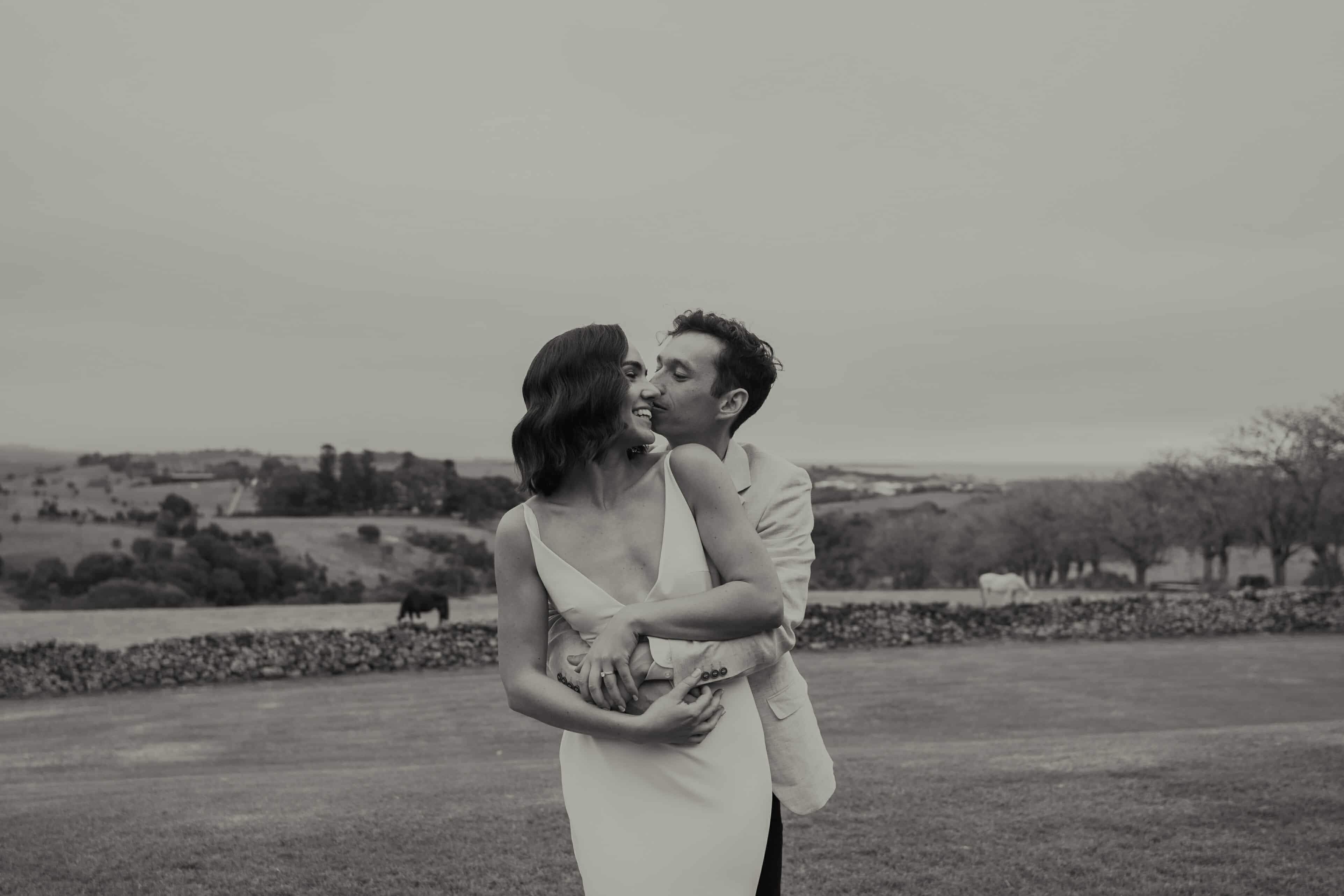
Portrait time can be calm and concise when the schedule protects it before the light disappears.
Start with three fixed points
Do not begin by filling every five-minute gap. Start with the parts of the day that are genuinely fixed: the ceremony start, the sunset at the venue and the reception entrance or dinner service. Everything else can be arranged around those anchors.
Sunset is different across NSW and changes substantially through the year. Use the wedding date and the venue’s location, not a generic seasonal guess. Geoscience Australia’s sunrise and sunset calculator is a reliable starting point, then allow for hills, buildings, tree lines and weather that may block direct light earlier.
For a closer look at how the season changes portrait timing, read the best time of day for wedding photos.
How much time should each part of the wedding day take?
The ranges below are planning allowances, not promises. The people involved, the distance between locations and the traditions in your day matter more than a template.
Preparation: about 45–75 photographed minutes per location
Photography usually works best during the final, active part of preparation rather than hours of hair and makeup. That window can hold details, people arriving, final touch-ups, getting dressed and a few portraits without manufacturing a morning that did not happen.
If two people are preparing in different places, a single photographer needs enough time to finish at one location, travel and arrive at the next. When both stories happen at the same time, a second photographer may be more useful than trying to compress both into an impossible sequence.
Travel: map the real door-to-door movement
A fifteen-minute drive is rarely a fifteen-minute block in the run sheet. Add time to load the car, leave the property, park, walk to the ceremony and handle traffic near towns or coastal venues. For separate locations, a ten-to-fifteen-minute buffer around the mapped drive is a sensible starting point; add more where parking or access is uncertain.
Guest arrival and ceremony: follow the actual ceremony plan
The photographer should be in position before the processional begins. Allowing 15–20 minutes for guest arrivals can produce useful context and gives space to photograph the ceremony setting before every seat is filled. The ceremony itself may be brief or extended by readings, rituals, music or signing, so use the celebrant’s confirmed duration rather than a standard number from the internet.
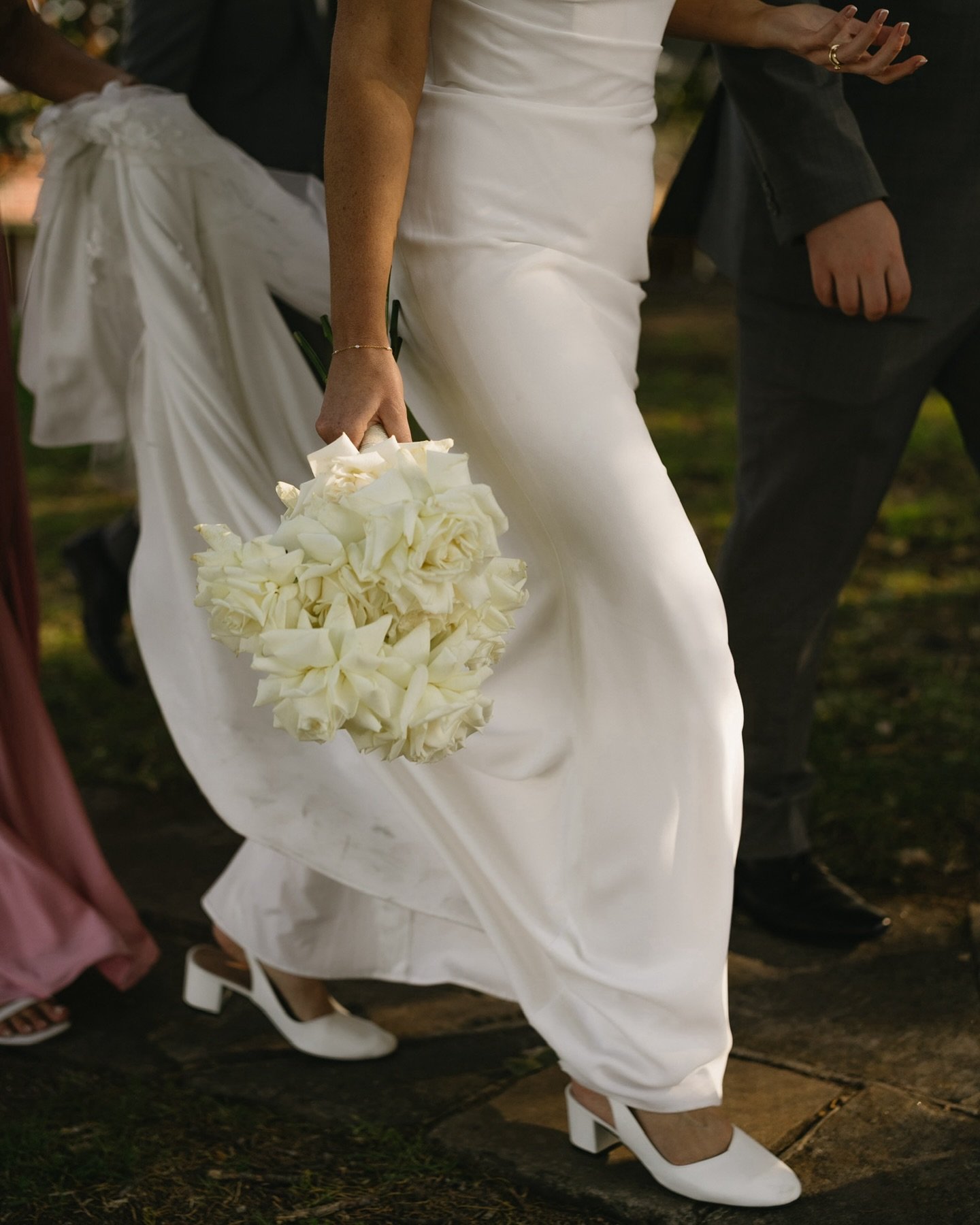
Leave enough margin before the ceremony for arrivals, final checks and the processional to unfold without a rush.
Congratulations and confetti: allow 10–15 minutes
The minutes immediately after the ceremony are rarely tidy, which is exactly why they photograph well. People hug, laugh, lose track of the line and pull someone back for another congratulations. Avoid sending everyone straight into formal groups unless the venue schedule demands it.
Family photographs: usually 15–25 minutes
A concise family list can move quickly. The time expands when names are missing, guests have wandered to drinks or there are many near-identical combinations. Write the groupings in advance, place the largest or least-mobile groups first and give one person from each family the job of finding people.
Prioritise the photographs that matter, not every possible permutation. Extra groups with friends can be made informally during the reception without holding the entire afternoon in place.
Wedding-party photographs: usually 15–20 minutes
A few clear group photographs are useful, but this section does not need to become a catalogue. Once the essential frames are covered, movement, conversation and a short walk create photographs that sit more naturally beside the candid parts of the gallery.
Couple portraits: about 25–40 minutes in total
The best portrait plan usually uses one nearby area well instead of driving to several locations. Twenty to thirty minutes after the ceremony can be enough for a varied set, particularly when the venue offers different backgrounds within walking distance.
If the light improves later, step outside for another five to ten minutes. Splitting the session keeps you closer to guests and gives the gallery a genuine change of atmosphere. The directed photographs can still feel relaxed; Andre’s approach to posing couples is built around movement rather than rigid positions.
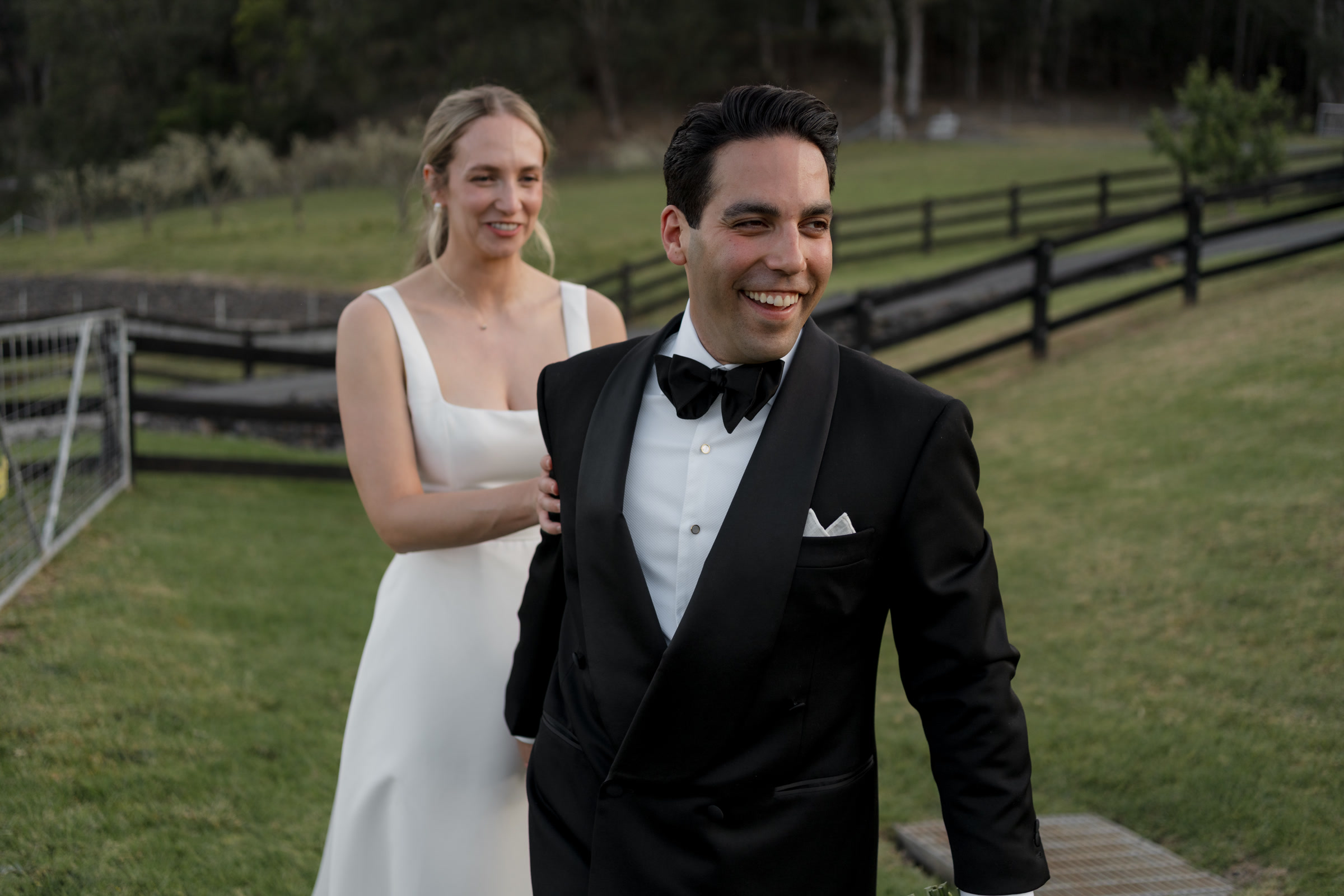
A useful timeline creates room for movement and personality instead of demanding a long formal photoshoot.
Reception details: protect 10–15 minutes before guests sit
Tables, stationery, flowers and the untouched room are easiest to photograph in a short window before guests enter. The photographer needs access before bags, jackets and half-finished drinks appear. Coordinate this with the venue so the room is genuinely ready rather than scheduling the photographs while staff are still setting it.
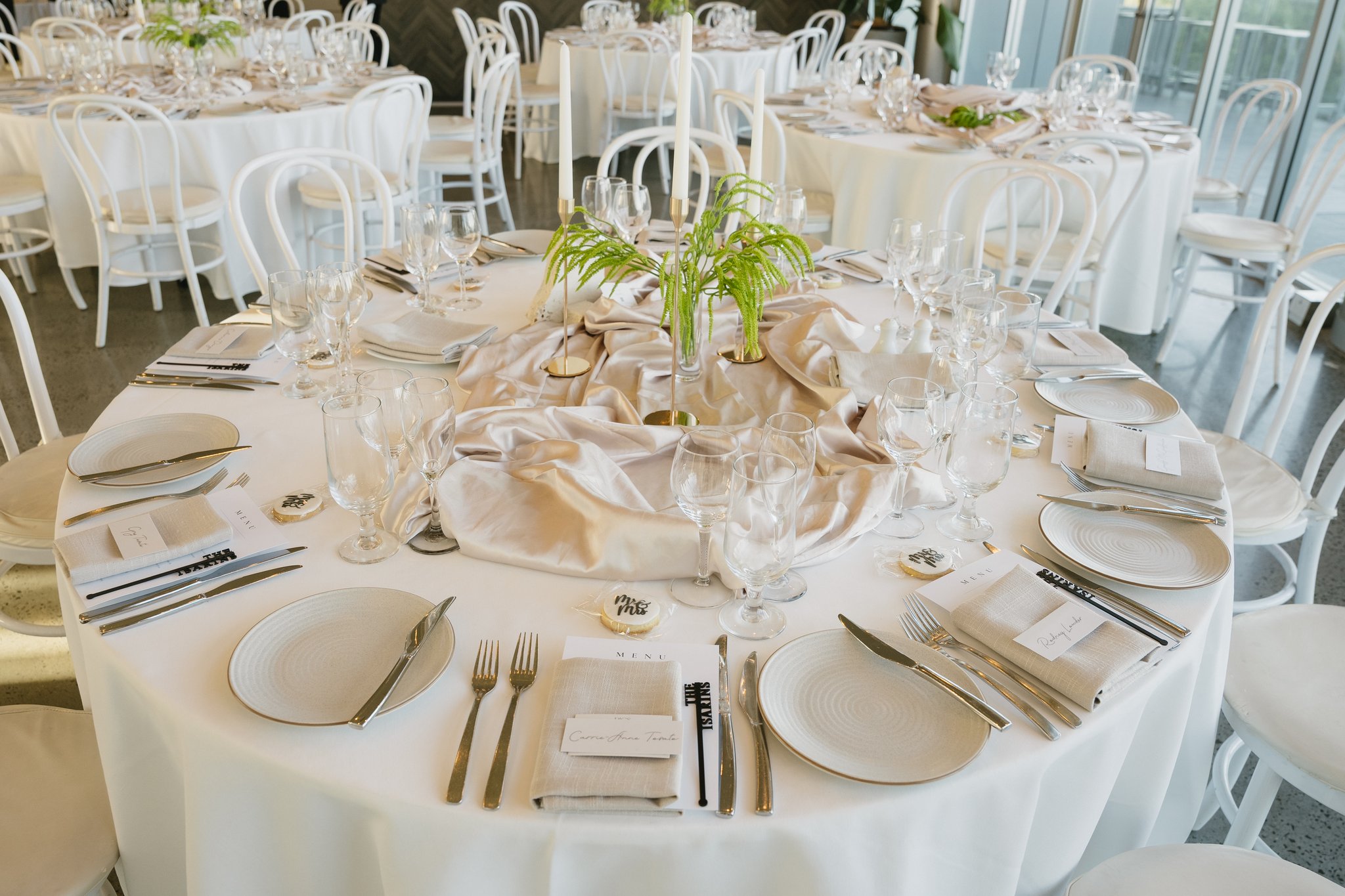
A short empty-room window preserves the work that went into the reception before the party changes it.
Reception formalities: sequence them with the venue and MC
Speeches, cake cutting and the first dance do not exist in isolation. Meal service, clearing plates, venue access and entertainment all affect when they can happen. Ask the venue and MC to place the events you want photographed within the confirmed coverage, then share the final run sheet with the photography team.
If dance-floor photographs matter, leave enough time after the first dance for guests to join and the room to develop some energy. Ten genuine minutes can be more useful than an hour of an empty floor scheduled too early.
Example wedding photography timeline for a 3:30 pm ceremony
This example assumes modest travel, a reception at or near the ceremony venue and useful portrait light around 6:45 pm. It is an illustration, not a template to copy without checking your date and location.
12:45 pm — final preparation, details and people getting dressed
2:15 pm — photographer leaves for the ceremony with travel buffer
3:00 pm — ceremony setting and guest arrivals
3:30 pm — ceremony
4:05 pm — confetti, congratulations and candid reactions
4:20 pm — family photographs
4:40 pm — wedding-party photographs
5:00 pm — first couple-portrait window
5:30 pm — cocktail-hour candids and reception details
6:00 pm — reception entrance
6:35 pm — optional ten-minute portrait break if the light suits
7:15 pm — dinner service
8:00 pm — speeches
8:45 pm — cake and first dance
9:00 pm — dance-floor coverage
If preparation, ceremony and reception are far apart, the same events need a wider span. If everything happens on one property, the travel block can become time with guests rather than extra portrait time for its own sake.
Single-venue and split-location timelines are different
A single-venue wedding is usually easier to keep relaxed. People can walk between preparation, ceremony and reception, and a delay in one part of the day does not immediately become a traffic problem. It also gives the photographer more chances to work with changing light without taking the couple away from the celebration.
A split-location day can work beautifully, but the run sheet needs to acknowledge every transition. Do not rely only on the drive shown in a map. Parking, loading, walking, greetings and venue access all consume time. Where possible, keep the portrait location on the natural route between the ceremony and reception rather than adding a separate detour.
How NSW daylight changes the order
In a summer wedding, the softest light may arrive well into the reception. Take enough portraits earlier to tell the story, then use a brief later session if the sky and schedule cooperate. There is no need to hold the entire portrait session until sunset.
In winter, the light may be gone before canapés finish. That can make an earlier ceremony, a first look or pre-ceremony portraits more practical. The goal is not to chase a golden-hour cliché; it is to understand when the venue actually loses useful light and put the important outdoor photographs before that point.
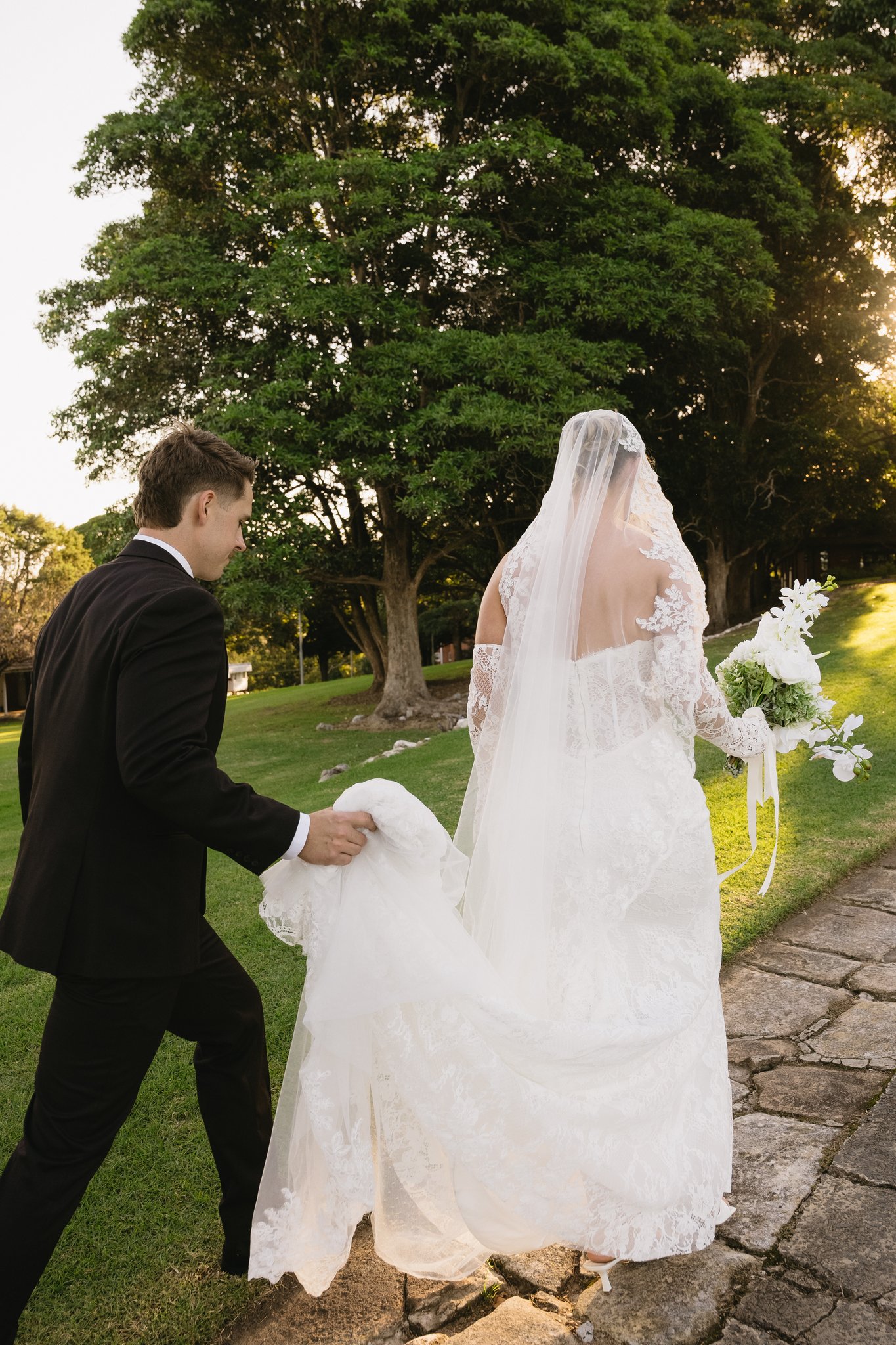
A small protected window near the best available light can add atmosphere without taking over the afternoon.
When a first look helps
A first look can move couple and wedding-party photographs before the ceremony, which leaves more of cocktail hour free for guests and family. It is particularly useful for winter weddings, ceremonies close to sunset or couples who want to enter the reception soon after the ceremony.
It also moves the photographer’s start time earlier, so it does not automatically reduce the total coverage needed. Read the practical reasons to choose or skip a first look before reshaping the run sheet around it.
Build a rain plan before it rains
A wet-weather plan should name an actual covered location, not simply say ‘indoors’. Check how many people fit there, whether the light is usable, how far it is from the ceremony and whether the venue needs to reset the room between events. Leave the decision deadline with one person so the couple is not fielding weather questions while getting ready.
Light rain can still create strong photographs. The schedule needs enough flexibility to use a short dry break or move a portrait window, rather than abandoning every outdoor frame because the original ten-minute slot was wet.
A final timeline check one month out
Confirm the ceremony duration with the celebrant, including signing and any rituals.
Confirm every address, access point and realistic travel time.
Check sunset for the venue and note when hills or buildings may block it.
Keep the family-photo list concise and nominate two people to gather guests.
Ask the venue when the reception room will be complete and accessible.
Put speeches, cake and first dance in an order that works with meal service.
Share one final version with the photographer, planner, venue, celebrant, MC and video team.
Leave small buffers around travel and transitions instead of scheduling every minute.
Wedding photography timeline FAQs
What time should a wedding photographer arrive?
The photographer should arrive early enough to cover the final meaningful part of preparation and still reach the ceremony before guests settle. Work backwards from the ceremony using the preparation story you want, the distance between locations and an arrival buffer.
How long should family wedding photos take?
A concise, organised list often fits into 15–25 minutes. More combinations, missing guests, mobility needs or complex family dynamics require more time. Planning the order matters as much as the number of groups.
How long should couple portraits take?
For many weddings, allow about 25–40 minutes in total. That can be one session or two shorter windows. A nearby location and a clear plan usually produce more variety than travelling to several backgrounds.
Should the timeline be built around sunset?
Sunset should influence the portrait plan, especially in winter, but it should not control the entire wedding. Protect enough earlier time to make the essential photographs, then use a short later session if the light and reception schedule allow it.
What happens if the wedding runs late?
A good run sheet has buffers and clear priorities. When time slips, protect the ceremony, key family groups and the reception events that matter most. Reduce repeated groupings or move a portrait window before cutting meaningful moments without discussion.
Build a timeline that leaves room for the wedding
The schedule should support the photographs, not turn the day into a production. Enough structure means the important people are in the right place, the light is understood and nobody is surprised by travel. The rest can stay loose enough for conversations, reactions and all the things that cannot be planned.
Browse Andre’s wedding photography portfolio to see the balance of candid coverage and editorial portraits across a full day. If you already have a venue, ceremony time and rough reception plan, send through the details. Andre can help turn them into a photography timeline that feels realistic for your date and locations.