
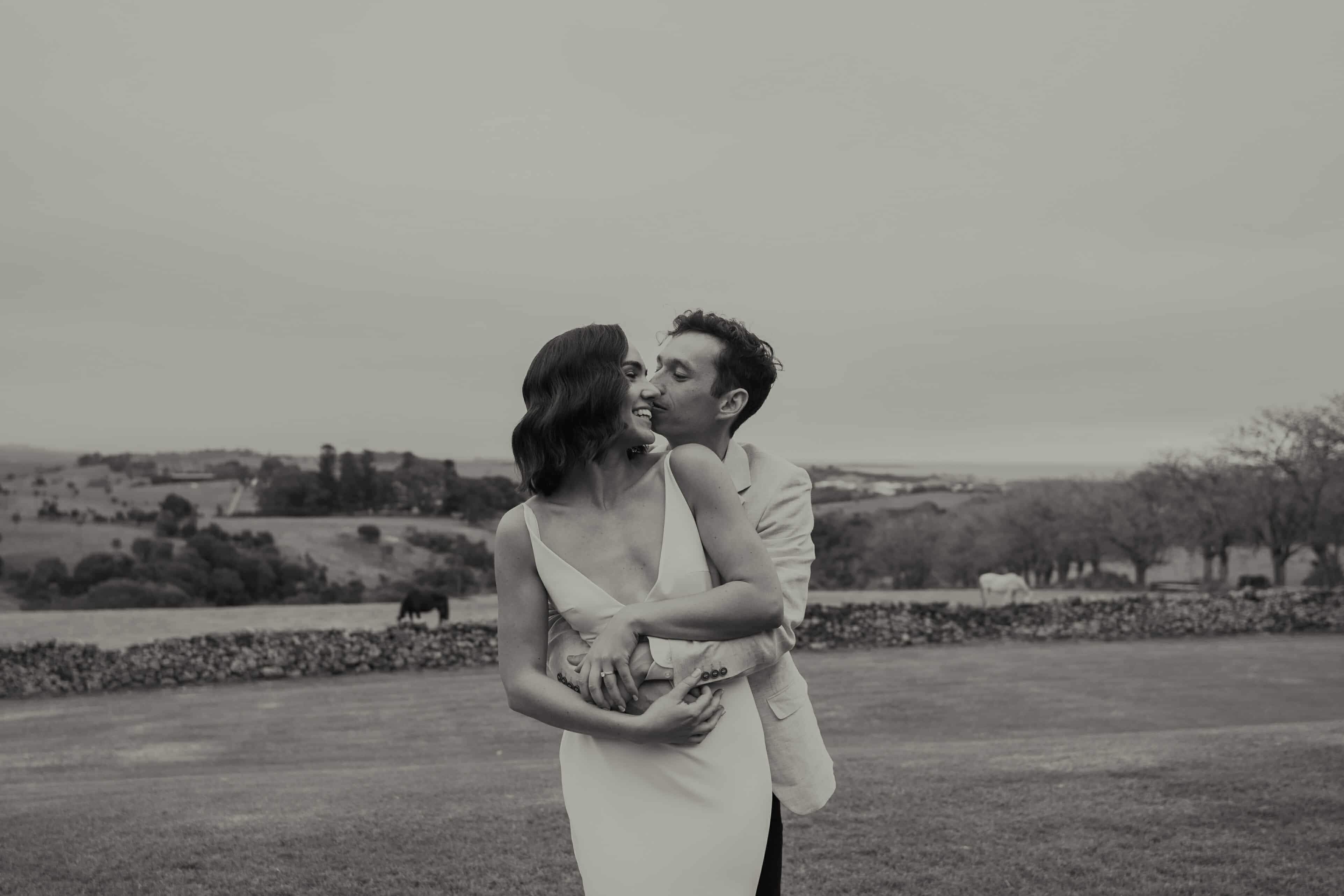


If you want to know the best time of day for wedding photos, the short answer is golden hour, but in Australia, that hour shifts dramatically with the seasons and your location.
After years photographing weddings across Sydney, the South Coast and the Southern Highlands, I've learned that the right timeline is what makes warm, flattering light possible. Here's how I plan for it.

Why Light Is Everything in Wedding Photography
Great wedding photos start with great light. Before composition, before posing, before any clever camera trick, the quality of the light is what gives an image that warm, editorial feel couples fall in love with.
The single biggest factor you control is timing. Where the sun sits in the sky at the moment we're making portraits affects how soft your skin looks, how flattering the shadows fall, and whether the whole scene glows or feels harsh and squinty.
The good news: you don't need to be a photographer to plan for this. You just need to understand a few simple rules about how light behaves through the day, and how that changes across the Australian seasons.
The Best Time of Day for Wedding Photos: Golden Hour
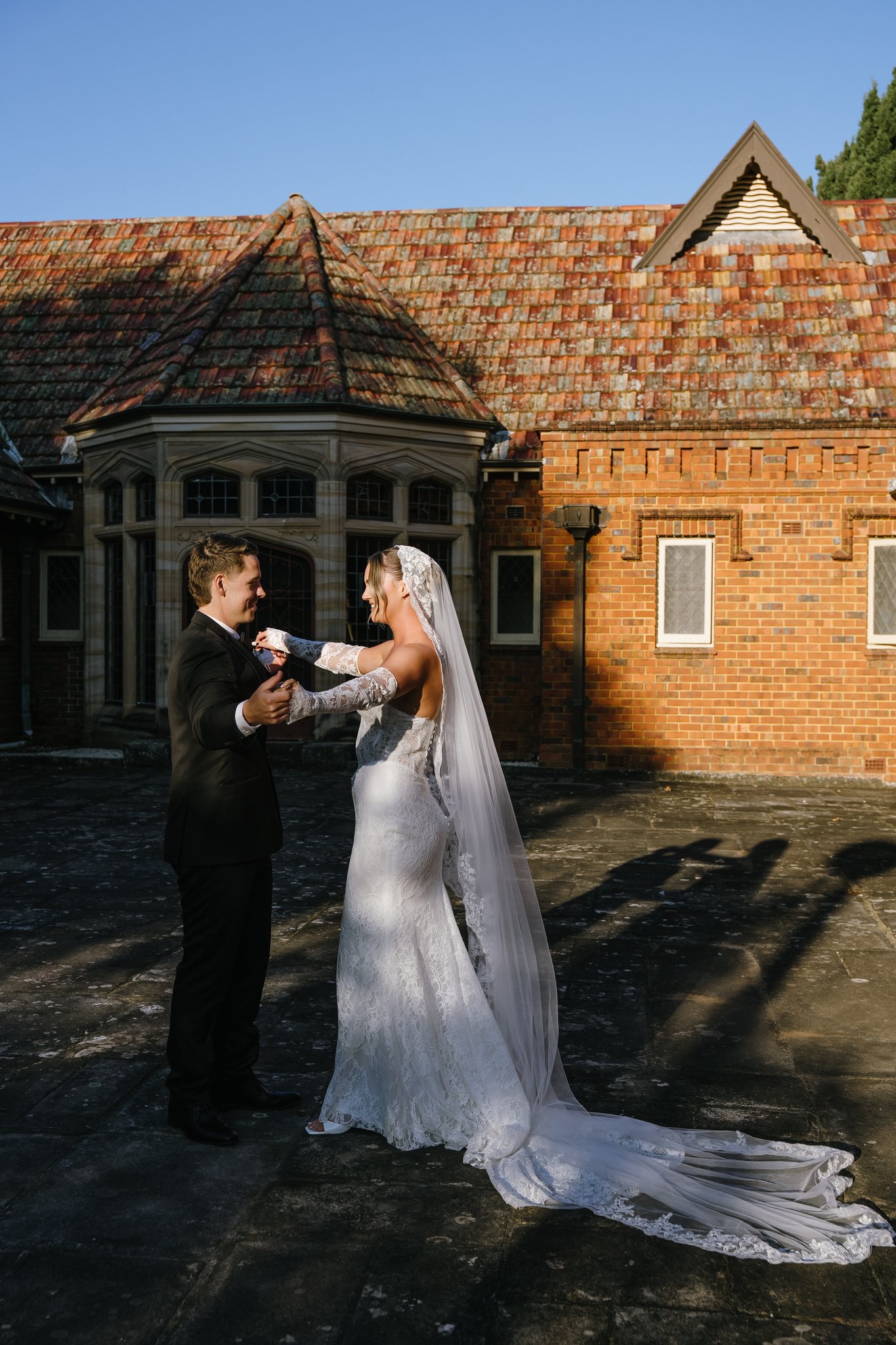
If I had to name the single best time of day for wedding photos, it's golden hour, the roughly 60–90 minutes after sunrise and before sunset. During this window the sun sits low on the horizon, so its light travels through more atmosphere and softens into a warm, directional glow.
Why golden hour wins:
Soft, flattering light with no harsh shadows under the eyes
Warm tones that make skin look healthy and gowns look luminous
Long shadows and backlight that add depth and that dreamy, cinematic quality
No squinting: your guests and your faces relax instantly
For most weddings, I plan the couple's portrait session for the 30–45 minutes leading into sunset. Even if the ceremony and reception times are fixed, we can almost always carve out a short window to step away and chase that light.
Australian Light Changes With the Seasons
Here's where many couples get caught out: golden hour in Australia is a moving target. Sunset times swing by hours between summer and winter, and that completely reshapes a wedding day timeline.
Rough sunset guidance for New South Wales:
Summer (Dec–Feb): sunset around 7:45–8:15pm, late golden hour, long evenings
Autumn (Mar–May): sunset drifting earlier, roughly 5:15–7:00pm
Winter (Jun–Aug): sunset as early as 4:50–5:15pm, golden hour arrives mid-afternoon
Spring (Sep–Nov): sunset climbing back to 6:00–7:30pm
The practical takeaway: a 4:00pm ceremony works beautifully in summer but might mean you miss golden hour entirely in June. A winter wedding often needs an earlier ceremony, sometimes 1:00 or 2:00pm, so we still have natural light for portraits.
Always check the actual sunset time for your wedding date and town before locking in your timeline. Sydney, the South Coast and the Southern Highlands can differ slightly, and a hilly or tree-lined venue can lose the sun 15–20 minutes earlier than the official time.
How to Build Your Timeline Around the Light
When I help couples plan their wedding photography timeline, I work backwards from sunset. Here's the framework I use.
1. Find your sunset time, then count back
Once we know sunset, I block out the 30–45 minutes before it for couple portraits. Everything else slots around that anchor.
2. Decide on a first look (or not)
A first look, a private moment where you see each other before the ceremony, gives huge flexibility. It lets us do portraits and family photos earlier, so you can actually enjoy cocktail hour with your guests and still return for golden hour. If you'd rather keep the tradition of meeting at the aisle, that's completely fine; we just plan the timeline more tightly.
3. Schedule the ceremony with care
Midday ceremonies in an open field under full summer sun are the toughest scenario for flattering light. If your ceremony must be at high noon, look for:
Open shade (under a verandah, large tree, or building edge)
A spot where the sun is behind you, not your guests
An indoor or covered option as a backup
4. Protect a golden hour window
Even 15 minutes makes a difference. I'll often pull couples away briefly after dinner for a few sunset frames. It doubles as a quiet, romantic break from the crowd.
Shooting in Harsh Midday Sun
Life happens, and not every moment lands in golden hour. Bright midday sun is unavoidable for many ceremony and daytime celebration shots, and that's okay. A few tactics keep things looking clean:
Seek open shade rather than fighting direct overhead sun
Backlight the subject so the sun rims their hair instead of blasting their face
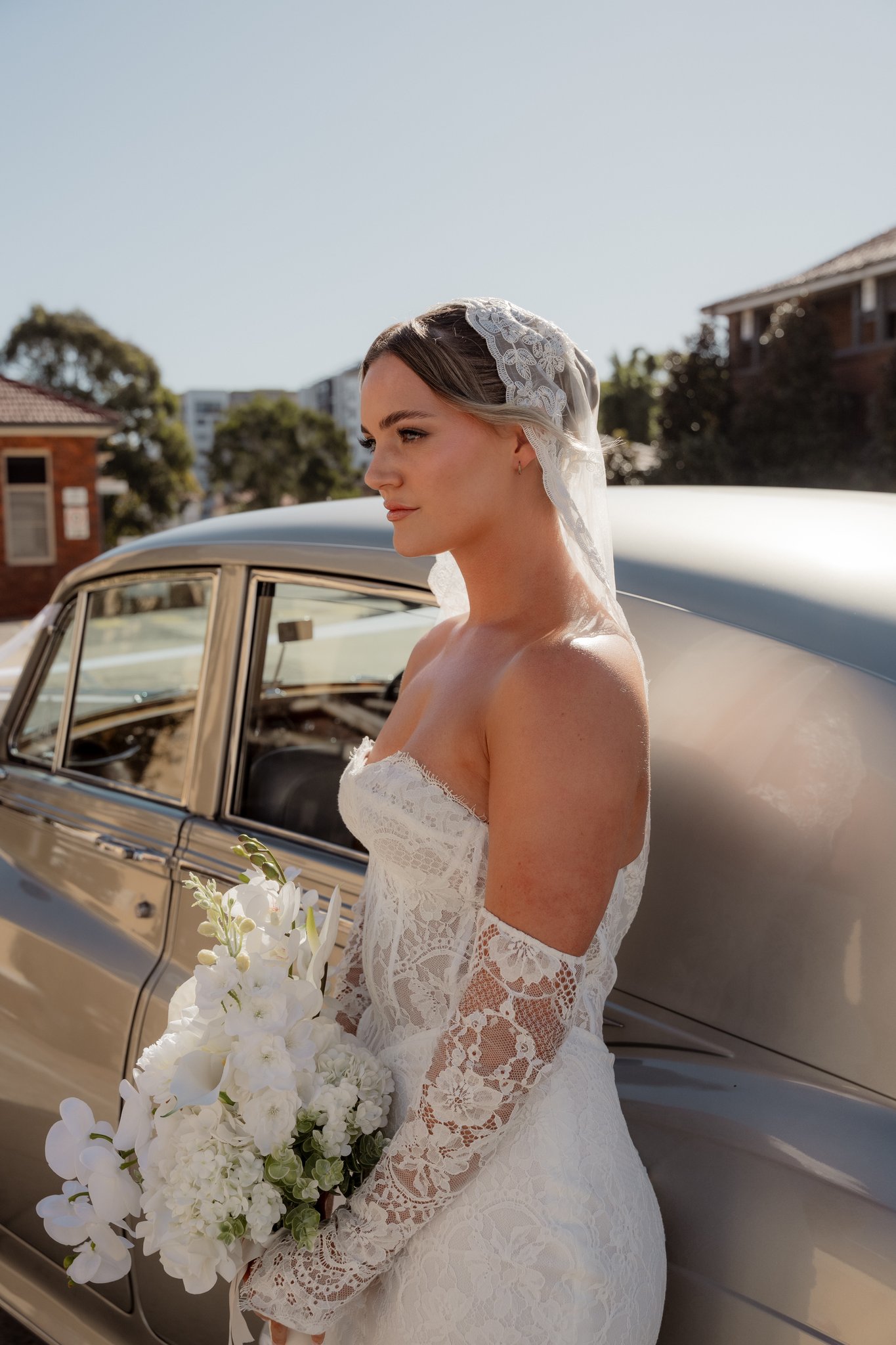
Use the time for vibrant, energetic photos: bright daytime light suits things like a classic shot beside a vintage car, group fun, and lively candids
Avoid dappled light through patchy trees, which creates messy, blotchy shadows
The Southern Highlands' gardens and the South Coast's beaches both offer beautiful midday options if we're thoughtful about placement.
Overcast Days Are a Gift
Many couples panic when clouds roll in. Don't. A bright overcast sky acts like a giant softbox: even, gentle light with no harsh shadows, flattering on every skin tone. Some of my favourite portraits happen on grey days. Rain has a backup plan; bad light is harder to fix, and overcast solves it for you.
A Sample Golden Hour Timeline
For a summer NSW wedding with sunset around 8:00pm and no first look, a timeline might look like:
3:30pm: Ceremony
4:00pm: Family and group photos in open shade
4:30pm: Guests to cocktail hour; a short couple session
6:00pm: Reception begins, dinner
7:20pm: Sneak out for 20–30 minutes of golden hour portraits
8:00pm: Back inside for dancing
For a winter wedding with a 5:00pm sunset, simply shift everything earlier, ceremony at 1:30 or 2:00pm, and you'll still catch that magic light.
FAQ
What is the best time of day for wedding photos?
Golden hour, the 60–90 minutes after sunrise or before sunset, gives the softest, warmest and most flattering light. For most weddings, the period just before sunset is ideal for couple portraits.
What time should my ceremony be?
Work backwards from sunset on your date. In summer NSW, a mid-to-late afternoon ceremony works well. In winter, with sunset as early as 5:00pm, you'll likely want an early afternoon ceremony so portraits still happen in daylight.
What if it's cloudy on my wedding day?
Overcast skies are actually wonderful for photography. The clouds diffuse the sun into soft, even light with no harsh shadows, which is very flattering. We adapt the timeline easily and the photos still look beautiful.
Can we still get great photos with a midday wedding?
Absolutely. We use open shade, backlighting and clever positioning to keep midday light flattering, and reserve any free moments near sunset for romantic golden hour portraits.
Let's Plan Your Light Together
Every wedding is different, and the perfect timeline depends on your date, your venue and the way you want the day to feel. Whether you're marrying in Sydney, along the South Coast or up in the Southern Highlands, I'm happy to help you map out a timeline that makes the most of the light. You can see that golden light at work across my wedding portfolio, and when you're ready, get in touch and let's start planning a day that looks as good as it feels.