

Greyleigh brings gardens, pink farm buildings, stone walls and coastal views together on one Kiama estate. If you're planning your wedding here, the main photography decisions are where to hold the ceremony, how far you want to walk for portraits and what happens if the weather changes.
I photographed Sarah and Archie's wedding at Greyleigh. This guide takes a planning approach: how to make time for photographs while staying close to your guests, and which details to check with the venue before the day.

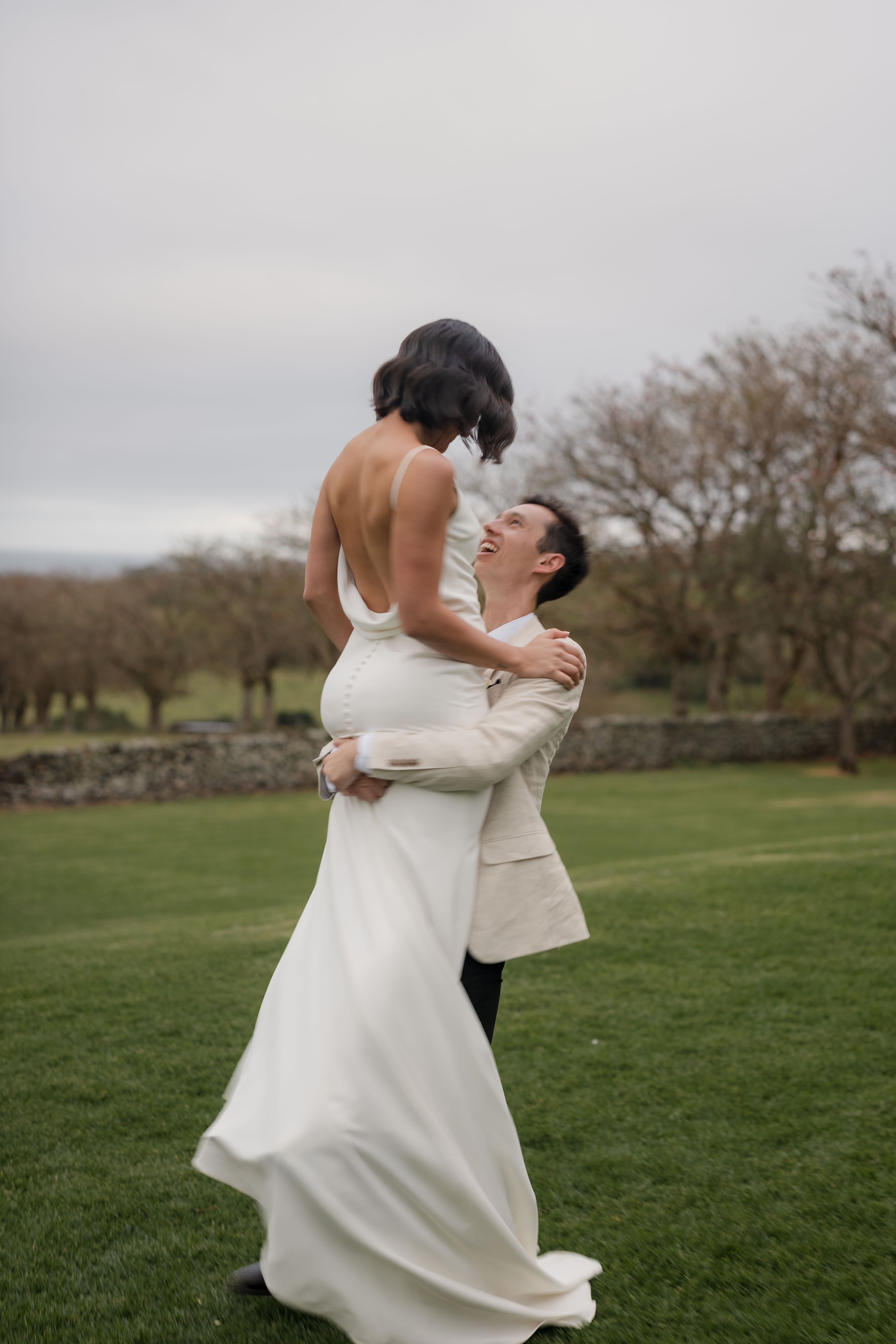
You can see the property in Sarah and Archie’s wedding story and full Greyleigh gallery. The photographs in this guide are from their day.
Choose your spaces before building the timeline
Greyleigh’s Secret Garden has a tree-lined aisle and views across the hills towards the sea. The Lawn is framed by stone walls and fig trees, with an outlook towards Kiama’s beaches and the escarpment.
Ask which gardens, paths and building exteriors are included in your booking. A short route through a few nearby spots is easier to fit into the afternoon than a long list of portrait locations. Check the walking surfaces and distances, particularly for anyone who needs easier access.
Check ceremony light for your date
The same ceremony spot can look quite different across the seasons. Before setting the time, check the sun’s direction, tree shade and wind exposure for your wedding month. Look at where both of you will stand, not just the view behind the arbour.
Low afternoon sun can still mean squinting or patches of light across your faces. Work through the orientation with your photographer and celebrant, including the aisle and guest seating. If you’re wearing a veil or loose hair, wind belongs in that conversation too.
Keep portraits close to the celebration
Start with a short family list and an accessible spot with even light near the ceremony. Leave time for congratulations before moving people into groups. Twenty to thirty minutes for transitions and family photographs is a useful starting allowance, then adjust it to your actual combinations.
For the two of you, allow around fifteen to twenty-five minutes for a walk through approved garden or farm-building areas. If the light and reception schedule suit, you could step out again for ten to fifteen minutes later. Keep that second window optional rather than making the day depend on sunset.
Leave time for guests
Keeping preparations, ceremony and reception on one property can reduce travel. It also leaves room for photographs of the parts between events: people arriving, hugs after the ceremony and conversations on the lawn. Those moments need time in the schedule as much as portraits do.
If that is the coverage you want, my guide to getting candid wedding photos explains how to keep the day relaxed without leaving everything to chance.

Agree on a wet-weather plan
Greyleigh describes The Gables as an indoor reception space. That does not confirm it as your ceremony backup. Ask the venue which arrangement is approved for your guest count and booking.
Which indoor or covered space can hold the ceremony if it rains or becomes too windy?
If the reception room is used, where will the tables go and who handles the turnaround?
Where can we take family and couple photographs under cover, and can all guests reach those spaces?
When does the weather decision need to be made, and who makes it?
A starting sequence for the afternoon
These are planning allowances, not a fixed run sheet. Portraits and family photos will usually take place during part of the drinks reception, so don’t add every block together as separate guest waiting time.
Preparations: 60–90 minutes for getting ready, details and time with the people around you.
Ceremony and congratulations: 30–45 minutes, adjusted to the ceremony you’ve planned.
Transitions and family photos: 20–30 minutes, depending on the list and walking distances.
Couple portraits: 15–25 minutes near the celebration.
Drinks and mingling: allow 60–90 minutes overall, with photographs fitted around it.
Optional later portraits: 10–15 minutes if the light and dinner timing allow.
Reception: coverage around your meal, speeches and dance floor plans.
For more help with the whole day, see my NSW wedding photography timeline guide.

What to check on your venue visit
Confirm the ceremony, reception and portrait spaces included in your booking.
Check the ceremony orientation for your date and planned hour.
Walk the route between spaces and check access for guests with mobility needs.
If you’re getting ready onsite, confirm the accommodation arrangements and look at the window light in those rooms.
Get the wet-weather plan and decision deadline agreed with the venue.
Questions couples ask
Can everyone stay onsite?
Greyleigh offers onsite accommodation, but don’t assume it covers your whole guest list. Ask about the current rooms, capacity and booking terms before allocating beds.
Is The Gables our rain backup?
Not automatically. Confirm which space is approved for your ceremony, how it works with the dinner setup and whether it suits your guest numbers.
Do we need sunset portraits?
No. A short portrait walk earlier in the afternoon may suit your plans better. Any later photographs depend on the light, weather and time you want to spend away from guests.
Planning a Greyleigh wedding?
Browse my wedding portfolio, or get in touch with your date and plans. Confirm the venue’s current spaces, access and booking terms with Greyleigh before settling the schedule.